


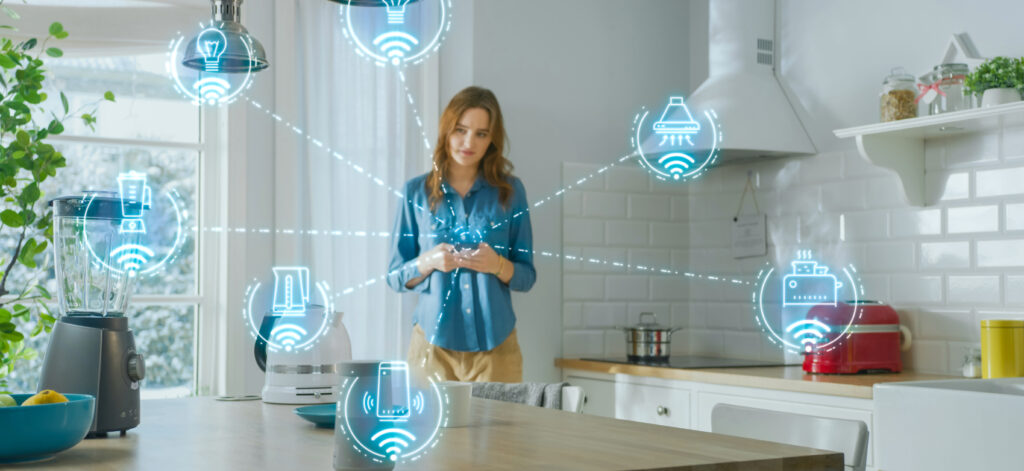
Smart home automation is changing the way people live, work, and manage their homes. Technology has moved beyond smartphones and computers and has entered almost every part of our daily routines. Today, homeowners can control lights, security systems, appliances, heating, cooling, and entertainment devices with a smartphone, voice command, or automated schedule.
The idea behind Smart Home Automation is simple: connect different devices so they can work together with less manual effort. Instead of walking around the house to turn everything on or off, a homeowner can manage many tasks from one place. Even better, some tasks can happen automatically based on time, movement, temperature, or other conditions.
What Is Smart Home Automation?
Smart home automation is a system that connects household devices and allows them to be controlled automatically or remotely. These devices may include smart lights, cameras, door locks, thermostats, plugs, speakers, appliances, and sensors.
For example, a smart lighting system can turn lights on when someone enters a room. A smart thermostat can adjust the temperature according to a schedule. A security camera can send an alert when unusual movement is detected.
The real advantage comes from making these individual devices work together as one connected system.
How Does Smart Home Automation Work?
A smart home usually depends on connected devices, sensors, software, and a communication network. Depending on the system, devices may communicate through Wi-Fi, Bluetooth, Zigbee, Z-Wave, or other technologies.
A central application or compatible control system allows homeowners to manage connected devices. Users can create schedules and automation rules according to their daily routines.
For instance, a homeowner might create a bedtime routine that turns off selected lights, locks smart doors, adjusts the thermostat, and activates security equipment.
This type of automation can save time because several actions can happen with one command or automatically.
Smart Lighting
Smart lighting is one of the easiest ways to introduce automation into a home. Smart bulbs and switches allow users to control lighting through an app, voice command, schedule, or sensor.
Imagine arriving home after sunset and having the entrance lights automatically switch on. Motion sensors can also activate lights when somebody enters a hallway or room.
Another advantage is flexibility. Users can create different lighting schedules for mornings, evenings, weekends, and vacations.
Smart lighting can also help reduce wasted electricity by switching lights off when they are not needed.
Smart Home Security
Security is one of the biggest reasons homeowners explore automation. Modern smart security systems can combine cameras, doorbells, sensors, alarms, and smart locks.
A connected security camera can allow homeowners to monitor their property remotely. Door and window sensors can provide notifications when unexpected activity occurs.
Smart locks can also provide convenient access without relying entirely on traditional keys. Some systems allow users to provide temporary access to family members or trusted visitors.
However, convenience should always be balanced with security. Connected devices should be protected with strong passwords and updated software.
Smart Thermostats and Climate Control
Maintaining a comfortable temperature can sometimes require constant adjustments. Smart thermostats can simplify this process by allowing users to create schedules and control temperature remotely.
For example, a homeowner can set the system to reduce heating or cooling while everyone is away and return to a preferred temperature before people arrive.
Some advanced systems can use sensors and usage patterns to make automatic adjustments.
This combination of comfort and control makes smart climate management an important part of modern home automation.
Smart Appliances
Smart appliances are another growing part of connected homes. Depending on the model, appliances such as washing machines, refrigerators, ovens, and air conditioners may offer remote monitoring or automated functions.
A smart washing machine, for example, may notify the homeowner when a cycle is complete. A connected air conditioner may allow remote temperature control.
The biggest benefit is not simply controlling an appliance from a phone. It is the ability to include appliances in broader household routines.
Voice Control
Voice control has made smart home automation more convenient for many users. Instead of opening an application, homeowners can use voice commands to control compatible devices.
Someone cooking in the kitchen, for example, can ask the system to turn on the lights without touching a switch.
Voice commands can also be useful for people who have difficulty reaching physical controls or managing multiple devices manually.
Smart Plugs
Smart plugs are among the simplest and most affordable ways to begin experimenting with home automation. They can turn ordinary electrical devices into remotely controlled devices.
A smart plug can be scheduled to turn an appliance on or off at a specific time. It can also become part of an automation routine.
For beginners, smart plugs provide a practical way to understand how connected home systems work without replacing every household appliance.
Energy Management
Energy efficiency is becoming increasingly important for modern households. Smart technology can help homeowners understand when and how devices are consuming electricity.
Automated schedules can prevent unnecessary operation of lights and appliances. Smart systems can also make it easier to manage heating, cooling, and other energy-intensive equipment.
Although smart devices alone cannot guarantee lower electricity bills, using automation thoughtfully can help reduce unnecessary consumption.
Remote Home Control
One of the most useful features of smart home technology is remote access. Homeowners can often check or control connected devices while they are away.
For example, if someone forgets to switch off a compatible appliance, they may be able to check its status through an app. Security cameras can also provide remote monitoring.
Remote control can be particularly useful for people who travel frequently or spend long hours away from home.
Creating Automated Routines
The true potential of smart home automation appears when multiple devices work together.
Instead of controlling every device separately, homeowners can create routines for common situations.
Morning Routine
A morning routine might gradually turn on bedroom lights, adjust the temperature, and activate selected appliances.
Leaving Home Routine
When leaving the house, a routine could switch off lights, turn off selected devices, lock compatible doors, and activate security equipment.
Evening Routine
An evening routine could adjust lighting, lower the temperature, and prepare the home for relaxation.
Bedtime Routine
A bedtime routine could turn off unnecessary lights, lock doors, and activate selected security features.
These routines can make repetitive household tasks much easier.
Smart Home Automation and Convenience
The biggest benefit of automation is often convenience. Small tasks may seem insignificant individually, but they can become frustrating when repeated every day.
Smart automation reduces the number of manual actions required to operate a home.
Instead of remembering every task, homeowners can create reliable routines that handle repetitive activities automatically.
Privacy and Cybersecurity
Smart home technology also introduces important privacy and security considerations. Connected devices may collect information about usage, activity, or household routines.
For this reason, homeowners should take basic security precautions.
Use strong and unique passwords for accounts, update device software regularly, secure the home network, and enable additional security features whenever they are available.
It is also wise to understand what information a device collects and how that information is handled.
Choosing the Right Smart Devices
Buying smart devices simply because they look interesting can create unnecessary complications. Compatibility should be considered before purchasing equipment.
Homeowners should ask a few basic questions:
- Does the device work with existing equipment?
- Does it require a particular hub?
- Is the setup easy to manage?
- What happens if the internet connection fails?
- Does the manufacturer provide software updates?
- Are privacy and security features available?
Answering these questions can prevent compatibility problems later.
Start Small
You do not need to transform your entire house into a smart home overnight.
Starting with one area is often the better approach. Smart bulbs, plugs, or a basic security device can provide an easy introduction.
Once you understand how the system works, you can gradually add more devices.
This approach also helps control costs and prevents the home from becoming unnecessarily complicated.
Common Smart Home Automation Mistakes
While automation can be extremely useful, poor planning can create frustration.
One common mistake is buying devices from different ecosystems without checking compatibility. Another is installing too many devices before understanding how they work.
Ignoring cybersecurity is another serious mistake. Connected devices should be treated as part of the home’s digital environment.
It is also important not to automate everything simply because it is possible. The best automation is technology that genuinely solves a problem.
The Future of Smart Home Automation
The future of smart home automation is likely to become increasingly intelligent. Artificial intelligence, sensors, connected appliances, and advanced software may allow homes to respond more naturally to people’s routines.
Future systems may become better at understanding patterns and making useful adjustments automatically.
Instead of simply responding to commands, smart homes could increasingly anticipate common needs while giving homeowners control over important decisions.
Is Smart Home Automation Worth It?
For many households, smart home automation can be a worthwhile investment. The value depends on individual needs, budget, lifestyle, and the quality of the chosen devices.
People interested in convenience may benefit from smart lighting and automated routines. Those focused on security may prefer cameras, sensors, and smart locks. Homeowners interested in energy management may explore smart thermostats, plugs, and monitoring systems.
The key is to choose technology based on real needs rather than buying devices simply because they are marketed as smart.
Conclusion
Smart home automation is no longer just a futuristic concept. It is becoming a practical way to manage everyday household tasks with greater convenience and control.
From smart lighting and security to connected appliances and automated routines, modern technology can make a home more responsive and easier to manage.
The best smart home does not necessarily contain the largest number of devices. Instead, it is a home where technology works quietly in the background and makes everyday life simpler.