

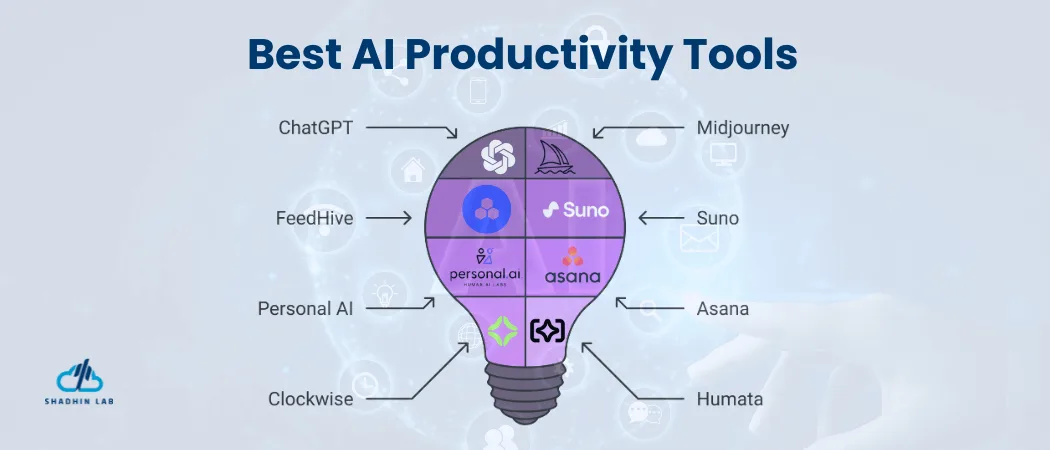
In today’s fast-moving digital world, getting more done does not always mean working longer hours. Instead, the right technology can help people organize their tasks, reduce repetitive work, and manage their time more effectively. This is where AI productivity tools are becoming increasingly useful.
Artificial intelligence is no longer limited to advanced research or large technology companies. Today, AI-powered tools can help students, freelancers, entrepreneurs, employees, marketers, writers, and business owners with everyday tasks.
From writing and planning to research, communication, scheduling, and data analysis, AI productivity tools can save valuable time while helping users stay organized.
What Are AI Productivity Tools?
AI productivity tools are software applications that use artificial intelligence to help users complete tasks more efficiently. They can understand text, analyze information, generate content, summarize documents, organize data, and automate repetitive activities.
Unlike traditional software, many AI tools can adapt to instructions and provide useful results based on the information a user gives them.
For example, an AI productivity tool might help someone:
- Write and improve documents
- Summarize long articles
- Organize daily tasks
- Generate ideas
- Analyze information
- Create meeting notes
- Draft emails
- Manage projects
- Automate repetitive work
The goal is simple: help people spend less time on routine tasks and more time on meaningful work.
Why AI Productivity Tools Are Becoming Popular
The modern workplace is filled with information, notifications, emails, meetings, and deadlines. Managing everything manually can become difficult.
AI productivity tools offer a way to reduce this workload.
One major advantage is speed. Tasks that once required significant amounts of time can sometimes be completed much faster with AI assistance.
Another benefit is organization. AI-powered applications can help users prioritize tasks and turn large amounts of information into easier-to-understand summaries.
As AI technology continues to improve, these tools are becoming useful for both personal productivity and professional workflows.
AI Tools for Writing and Content Creation
Writing is one of the most common areas where AI productivity tools are being used.
AI writing assistants can help users brainstorm topics, create outlines, improve grammar, rewrite sentences, and develop drafts. They can also help marketers create content ideas and organize campaigns.
However, AI-generated content should not simply be published without review.
Human editing remains important because people can add personal experience, accuracy checks, originality, and a natural writing style.
The best approach is to use AI as an assistant rather than treating it as a complete replacement for human creativity.
AI Productivity Tools for Time Management
Managing time effectively can be challenging when several tasks compete for attention.
AI-powered scheduling and planning tools can help users organize their workload. Some applications can identify priorities, create schedules, and remind users about important activities.
For busy professionals, better scheduling can make a significant difference.
Instead of spending a large part of the day deciding what to do next, users can create structured plans and focus on completing their highest-priority tasks.
AI for Email and Communication
Email management can consume a surprising amount of time.
AI tools can assist with drafting replies, summarizing long conversations, identifying important information, and improving the clarity of written communication.
For businesses, this can be particularly useful when employees receive large numbers of messages every day.
AI can help create an initial response, while the user can review and personalize it before sending.
This combination provides efficiency without completely removing human involvement.
AI Tools for Research
Research often requires reading and comparing large amounts of information.
AI productivity tools can help users summarize documents, identify important points, organize notes, and generate questions for further research.
Students and professionals can use these capabilities to understand complex material more quickly.
However, AI responses should always be checked against reliable sources when accuracy matters. AI can make mistakes, misunderstand information, or provide outdated details.
AI Productivity Tools for Businesses
Businesses are increasingly exploring AI because productivity directly affects efficiency and operating costs.
Small businesses can use AI tools for marketing, customer communication, content planning, data organization, and administrative work.
For example, a small business owner could use AI to develop social media ideas, prepare an email campaign, summarize customer feedback, or organize a project.
This allows small teams to accomplish tasks that might otherwise require additional resources.
AI and Project Management
Managing a project usually involves deadlines, responsibilities, documents, and communication.
AI-enhanced project management tools can help teams organize these elements more effectively.
Some tools can assist with task creation, progress tracking, summaries, and workflow management.
AI can also identify patterns in project information and help teams understand which tasks require attention.
Still, successful project management depends on communication and decision-making, so AI should support the team rather than replace human leadership.
AI for Data Analysis
Data can be difficult to understand when it is presented in large spreadsheets or complicated reports.
AI-powered productivity tools can make data easier to analyze by identifying patterns, generating summaries, and helping users ask questions about datasets.
This can be valuable for businesses that need to make decisions based on sales, customer behavior, website performance, or other information.
The quality of the analysis still depends on the quality of the underlying data. Therefore, users should verify important conclusions before making major decisions.
AI Productivity Tools for Students
Students can also benefit from AI when it is used responsibly.
AI can help students understand difficult concepts, create study plans, summarize learning materials, and generate practice questions.
For example, a student preparing for an examination can use AI to organize a revision schedule and explain complicated subjects in simpler language.
However, students should use AI as a learning assistant rather than relying on it to complete all academic work. Understanding the material remains the most important goal.
AI and Everyday Personal Productivity
AI productivity is not limited to offices and businesses.
Individuals can use AI to organize personal schedules, plan projects, create shopping lists, brainstorm ideas, manage notes, and learn new skills.
Someone planning a trip, for example, could use AI to organize research and create a structured plan.
Likewise, someone learning a new skill could use an AI assistant to create a customized study routine.
Benefits of Using AI Productivity Tools
There are several potential benefits to using AI in everyday workflows.
1. Saves Time
AI can automate or speed up repetitive activities, giving users more time for important work.
2. Improves Organization
AI can help organize information, tasks, notes, and schedules.
3. Supports Creativity
AI can generate ideas and alternatives when users are experiencing creative blocks.
4. Reduces Repetitive Work
Routine tasks such as summarization and basic drafting can often be completed more efficiently.
5. Helps With Decision-Making
AI can organize information and highlight patterns that may help users make better-informed decisions.
Potential Limitations of AI Productivity Tools
Although AI offers many advantages, it is not perfect.
AI systems can sometimes generate incorrect information. They may misunderstand instructions or produce answers that sound convincing but are inaccurate.
Privacy is another important consideration. Users should be careful about entering confidential business information, passwords, financial details, or sensitive personal data into AI services.
There is also a risk of overdependence. If people rely on AI for every task, they may spend less time developing their own problem-solving and creative abilities.
The best strategy is to use AI thoughtfully and maintain human oversight.
How to Choose the Right AI Productivity Tool
With so many AI applications available, choosing the right one can be confusing.
Start by identifying the problem you want to solve.
If writing takes too much time, look for an AI writing assistant. If scheduling is the problem, consider an AI planning tool. If research is taking too long, explore tools designed for information analysis and summarization.
Other factors to consider include:
- Ease of use
- Available features
- Privacy policies
- Integration with existing software
- Pricing
- Reliability
- Data security
A tool is only useful if it actually improves your workflow.
Tips for Using AI More Effectively
To get better results from AI productivity tools, users should provide clear instructions.
Instead of asking a vague question, explain exactly what you need.
For example, provide the purpose, audience, format, length, and important details when asking AI to create something.
It is also helpful to review AI-generated results carefully. Treat AI output as a starting point that can be improved rather than automatically accepting everything it produces.
Finally, avoid using too many tools at once. A small collection of useful applications is often better than dozens of tools that create additional complexity.
The Future of AI Productivity
AI productivity is likely to become an even bigger part of digital work.
Future tools may become better at understanding individual workflows, connecting different applications, and automating complicated processes.
Instead of simply responding to commands, AI assistants may increasingly help users identify priorities, prepare information, and complete multi-step tasks.
This could change how people interact with software and manage their daily responsibilities.
However, human judgment will remain important. AI can process information quickly, but people are still responsible for making decisions, checking accuracy, and determining what actions should be taken.
Final Thoughts
AI productivity tools are changing the way people work, learn, communicate, and organize their lives. They can reduce repetitive tasks, improve organization, support creativity, and save valuable time.
The key is not to use AI for everything. Instead, users should identify tasks where AI can provide genuine value and combine those capabilities with human judgment and creativity.
When used responsibly, AI can become a powerful productivity partner. For individuals and businesses looking to work smarter in 2026, learning how to use these tools effectively can be a valuable advantage.