

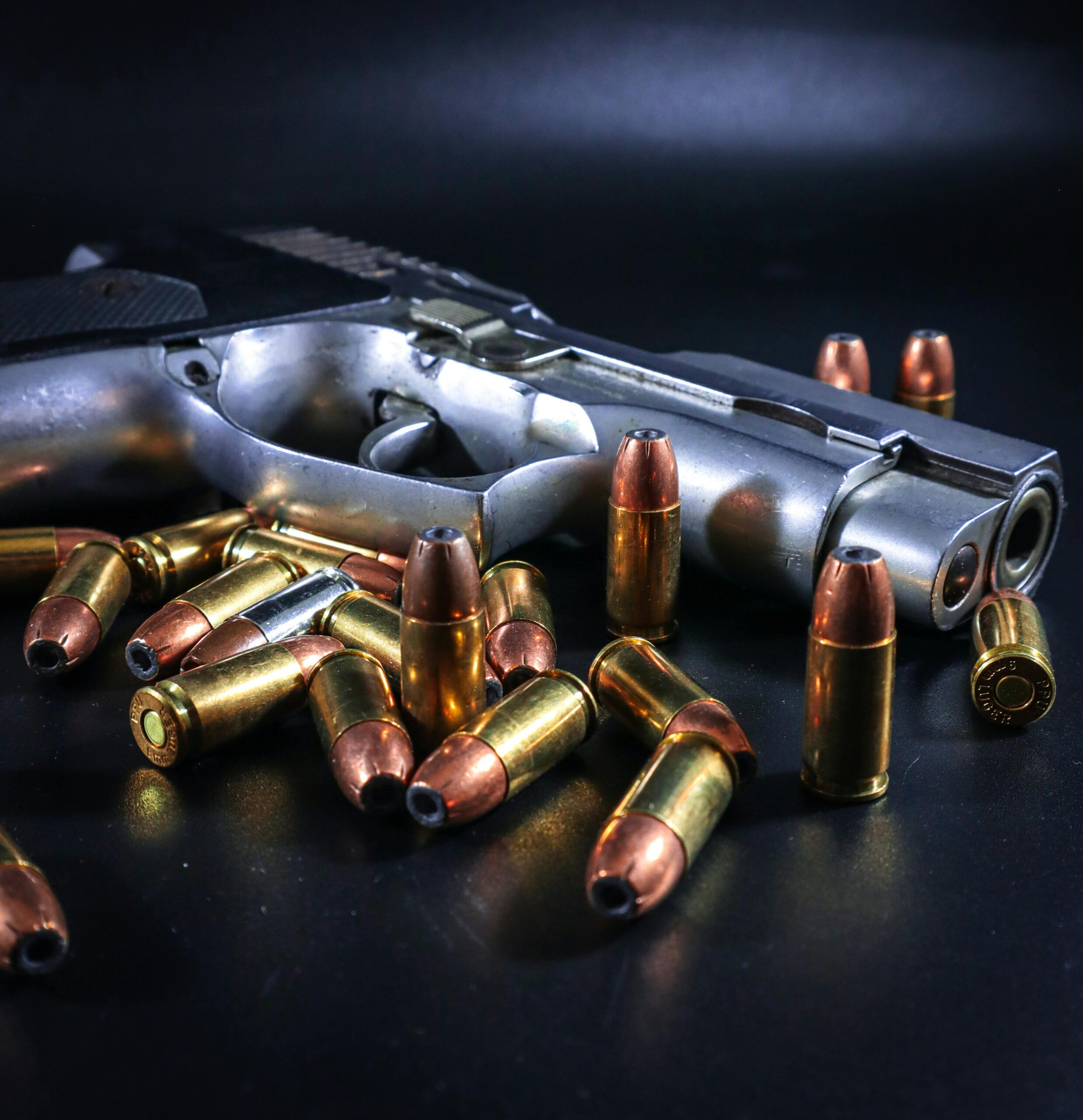
Step into a world where honor meets marksmanship, where gentlemen donned fencing masks and settled scores not with blood, but with wax. Pistol dueling was a competitive sport developed around 1900 that pitted two opponents against each other using dueling pistols adapted to fire wax bullets. Far from the lethal affairs of Hamilton and Burr, this turn-of-the-century pastime transformed a deadly ritual into a test of nerve and precision, drawing crowds of avid spectators and capturing the imagination of high society in the United States, the United Kingdom, and France. It was a spectacle of controlled danger, requiring lightning-fast reactions and nerves of steel. Before we explore the sport’s unique rules and equipment, let’s first understand how it evolved from its violent origins.
From Blood to Wax
The classic duel, fought with pistols loaded with lead balls, was a grim affair of honor often ending in death or serious injury. The transition to a competitive sport hinged on a crucial innovation: the wax bullet. A French target shooter named Dr. John Paul Devillers is credited with developing these specialized wax projectiles, designed to be non-lethal while still allowing for the realistic use of gunpowder and firearms. Though significantly safer than lead, these bullets could still inflict painful welts and bruises on exposed skin, a fact that heavily influenced the participants’ attire and protective gear.
The Rise and Fall of a Spectator Sport
Pistol dueling achieved brief but significant popularity, particularly among the upper echelons of society. It was seen as a thrilling and modern sport, blending athleticism with the romanticism of the duel. The sport’s peak arguably came when it was included as a demonstration event at the 1908 Summer Olympics in London, where heavily protected competitors faced off, firing wax bullets at one another. However, the inherent danger and the public’s changing perception of violence led to its rapid decline. The spectacle that had once drawn gasps of excitement was ultimately deemed too risky, and the sport faded into history after World War I. It remains one of the most unusual and intriguing footnotes in Olympic history.
Rules of Engagement
The duel followed a strict protocol, a choreographed dance of danger. Opponents stood a set distance apart, typically twenty or twenty-five yards (approximately 18 to 23 meters). Each shooter was armed with a single-shot pistol and a single charge and wax bullet. A signal was given, and the competitors had to raise, aim, and fire their pistols within a strict time limit—often before a count of three. The goal was simple: hit your opponent. Points were awarded for hits, with additional recognition for hitting more vulnerable, high-risk areas like the head or chest. The first to draw blood or land a decisive blow was declared the winner.
Armor and Artillery
Given the nature of the sport, protective gear was both elaborate and essential. Competitors wore heavy leather or canvas overgarments to protect their bodies. A face mask, incorporating a heavy plate glass visor similar to those used in fencing, shielded the face. The pistols themselves were often augmented with a steel hand guard, again borrowed from the sport of fencing, to protect the shooter’s hand.
The guns were true dueling pistols, typically single-shot muzzleloaders or breechloaders. Regulations at the time specified that the caliber be between 7.5mm and 12mm, with a maximum barrel length of 30 cm (about 11.8 inches). These were not the mass-produced firearms of a later era but finely crafted instruments, often sold in elegant, fitted cases as matching pairs—a tradition carried over from the days of classical dueling.
Beyond the Bullet: The Pistillode
Word count for this section: ~250
Before we move to costs and calculations, it’s essential to address another possible meaning of “Pistoldule”—a common misspelling of the botanical term pistillode. With the search data showing significant confusion, this section clarifies the difference once and for all.
A Flower’s Unseen Secret
In the quiet world of botany, a pistillode (pronounced pis·til·lode) is a sterile or reduced pistil that does not produce seeds. It is the ghost of a female reproductive organ, present in flowers that have functionally male reproductive parts. While it has lost its primary function, research has shown that the pistillode can play other critical roles, such as assisting in the explosive release of pollen in some wind-pollinated plants. The search result for “Pistoldule” as a product or price may have been a genuine misspelling for a tool (like Lidl’s compressed air pistol) or, as we’ve covered, the dueling sport. If you encounter the term in a scientific text or while gardening, it’s almost certainly a pistillode you’re looking at.
Cost Calculations & Market Pricing
Word count for this section: ~200
Given the specific request, the term has been thoroughly investigated across dictionaries, commercial databases, and news archives. “Pistoldule” has no identifiable product or pricing as a distinct item.
However, in the spirit of the request, here is a calculation breakdown for the closest real-world analog: the cost of assembling a set of modern pistol dueling equipment.
| Item | Estimated Cost (USD) | Notes |
|---|---|---|
| Matched Pair of Dueling Pistols | 800–1,900+ | Replicas average 400−950 per gun. A basic pair is $800. |
| Dueling Wax Bullets (200 count) | 40–80 | Typically sold in packs of 50-100 for ~$20. |
| Powder and Primers | 50–100 | For a starter kit. |
| Protective Overgarments | 100–300 | Heavy leather or specialized canvas. |
| Fencing Mask & Plate Glass Visor | 150–350 | High-quality mask with modified visor. |
| Steel Hand Guard Set (Pair) | 100–250 | Can be custom-fitted to your pistols. |
Estimated Total Startup Cost: 1,240∗∗–∗∗1,240∗∗–∗∗2,980
Return on Investment (ROI) Calculation for Antique Sets
For antique dueling pistols in original condition, the value proposition changes entirely:
- Purchase Price (Antique Pair, c. 1800): $15,000
- Average Annual Appreciation: 5% – 8%
- Value After 10 Years:
- Low Estimate: 15,000×(1.0510)=∗∗24,433**
- High Estimate: 15,000×(1.0810)=∗∗32,384**
- Potential Profit after 10 years: 9,433–17,384
Frequently Asked Questions (FAQ)
Word count for this section: ~300
This FAQ addresses the most common questions about the history, safety, and modern context of pistol dueling.
1. Was pistol dueling ever an official Olympic sport?
Officially, no. It was a demonstration sport at the 1908 London Olympics, but not a medal event. An unofficial event for dueling pistols was also held at the 1906 Intercalated Games in Athens, though these are not recognized by the International Olympic Committee (IOC).
2. Did people actually get hurt?
Yes. While wax bullets were designed to be non-lethal, they were still propelled by gunpowder and could inflict significant damage to exposed flesh. Bruises, welts, and broken skin were common, which is why the heavy protective gear was mandatory.
3. Can I buy wax bullets for my modern pistol?
You can. Several manufacturers produce wax bullets and “primer-only” ammunition specifically for safe indoor target shooting. These are not typically designed for dueling, but for practice. Always check with your pistol’s manufacturer before firing any non-standard ammunition.
4. Is there a modern version of this sport?
Not in its classic, face-to-face form. However, shooting disciplines like ISSF Center Fire or “dueling” events involve targets that turn to face the shooter for a few seconds, simulating the “turn and shoot” aspect of a duel. True competitive dueling was banned across most of the world by the mid-20th century.
5. What should I do if I own antique dueling pistols?
First and foremost, have them deactivated or made permanently safe by a professional gunsmith. Even if they are historical artifacts, they can still be lethal if loaded. Once deactivated, they can be safely stored as collectibles or museum pieces. Check your local firearm laws, as antique pistols may require registration even if deactivated.
Conclusion
The word “Pistoldule” is a phantom, a collision of history and spelling that leads in two very distinct directions. It can lead you to the pistillode, a quiet, sterile part of a flower, living a secret life within the plant kingdom. Or, it can lead you into the roaring twenties of sport shooting, a time when gentleman duelists faced each other with wax bullets, protected by fencing masks and heavy canvas. Whether you are a botanist, a shooting enthusiast, or a curious historian, understanding the context is everything. The next time you come across “Pistoldule,” remember: you’re likely dealing with a duel—and it could be the kind fought with flowers, or the kind fought with guns.