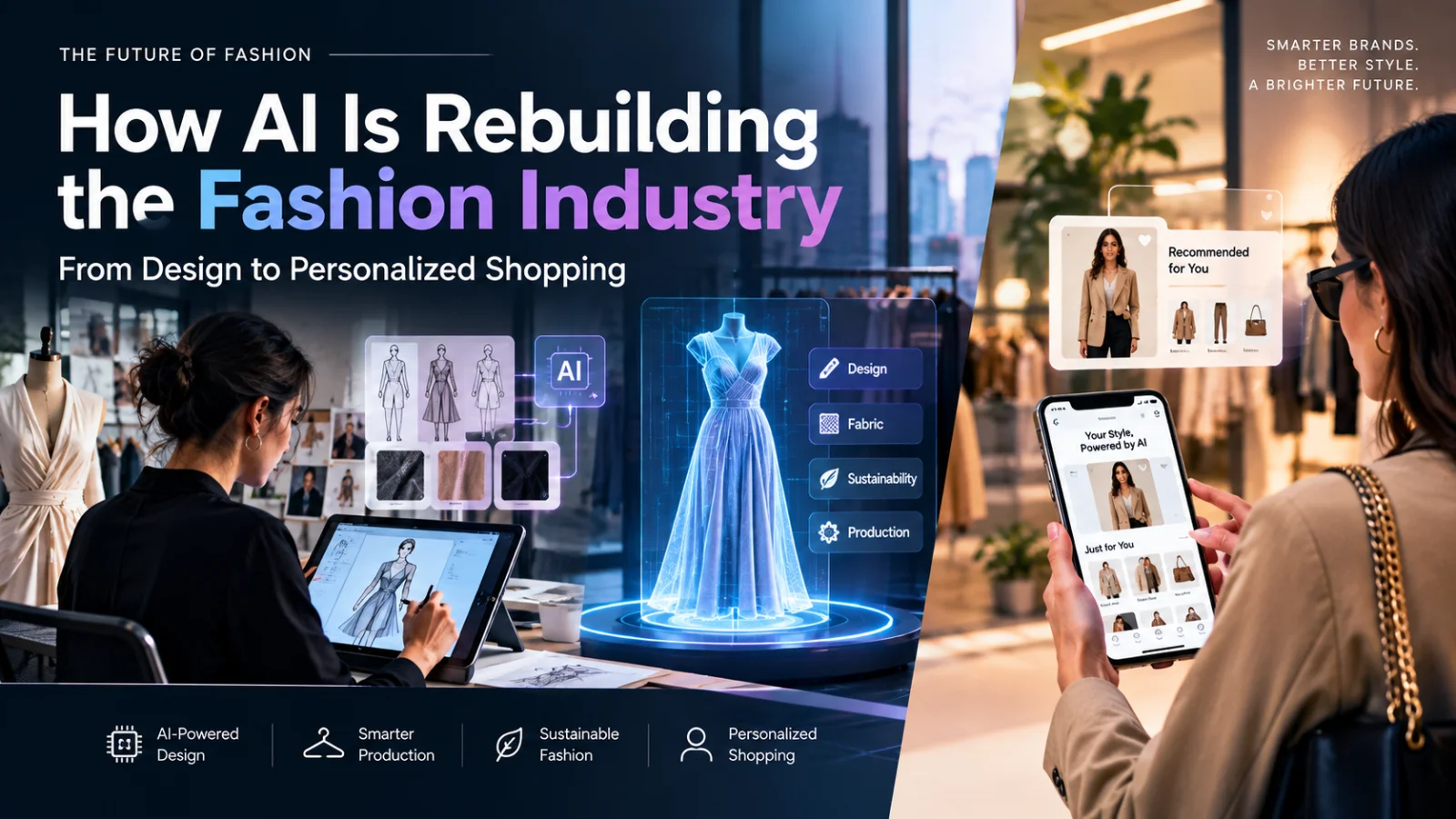

Introduction: Fashion Is Changing Faster Than Ever
The fashion industry moves fast, but artificial intelligence is making it move even faster. Reports show that AI powered personalization can lift average order value by 26 percent for fashion retailers. At the same time, AI design tools cut sample costs by 60 to 70 percent for many brands.
This is not a small shift. AI is touching every part of fashion, from the first sketch to the final checkout. Designers use it to create new looks. Stores use it to show each shopper the right items. Factories use it to plan production and reduce waste.
This article explains how AI is rebuilding the fashion industry in 2026. You will see real uses in design, supply chain, and personalized shopping, plus what this means for brands and buyers.
AI in Fashion Design: From Sketch to Sample
Design used to mean long cycles of sketches, fabric swatches, and physical samples. AI now speeds this up and opens new creative paths.
Generative AI tools like Midjourney, Flux, and fashion specific platforms help designers explore many ideas fast. A designer can type a prompt like summer dress with floral print and get dozens of variations in minutes. This does not replace the designer. It gives more options to choose from.
Print and pattern design is another big win. AI can generate textile prints, test colorways, and place graphics on garments before any fabric is cut. Brands like Zara and H and M use these tools to test trends before committing to production.
3D garment simulation tools like CLO 3D and Browzwear show how a design will drape and move on a digital body. This cuts the need for physical samples and speeds up decisions. Some brands report 60 to 70 percent fewer samples after adopting 3D and AI workflows.
The result is faster design cycles, lower costs, and more creative freedom. Designers spend less time on repetitive tasks and more on final choices.
Trend Forecasting and Demand Planning with AI
Guessing what will sell is risky. Overproduce and you waste money. Underproduce and you lose sales. AI helps brands make smarter calls.
Trend forecasting tools scan social media, runway photos, and search data to spot rising styles. Platforms like Heuritech and Designovel turn this data into clear briefs for design teams. A brand can see that olive green cargo pants are trending up in Europe and plan a collection around it.
Demand forecasting uses past sales, weather, and events to predict what will sell and when. AI models improve forecast accuracy by about 25 percent compared to old methods. This means better stock levels, fewer markdowns, and less waste.
Inventory and supply chain AI helps brands decide where to send stock and when to reorder. Tools from SAP, Oracle, and Blue Yonder run complex models that factor in store traffic, online behavior, and delivery times. The goal is simple. Have the right item in the right place at the right time.
These tools reduce guesswork and align production with real demand. That is good for profits and the planet.
AI Powered Personalized Shopping Experiences
Shoppers expect stores to know their taste. AI makes this possible at scale.
Product recommendations are the most common use. AI analyzes what you viewed, bought, and liked to suggest similar items. Reports show that AI driven recommendations drive 31 percent of ecommerce revenue in fashion. A shopper looking at black jeans may see matching tops and shoes based on their history.
AI stylists and chatbots guide shoppers through outfit choices. Brands like Ralph Lauren and Mango offer tools like Ask Ralph and Mango Stylist. You can ask for work outfits under 200 dollars or summer dresses for a beach wedding. The AI suggests items from the catalog that fit your request.
Dynamic homepages and category pages change based on who is browsing. A returning customer who likes streetwear sees different items than a new visitor who likes formal wear. This increases the chance of finding something you want and buying it.
Personalization makes shopping faster and more relevant. It also lifts sales and loyalty for brands that do it well.
Virtual Try On and AI Fitting Rooms
One of the biggest pain points in online fashion is fit. Will it look good on me? Will it be too tight or too long? AI try on tools address this directly.
Virtual try on buttons let shoppers upload a photo or choose an avatar with their body shape. The AI shows how the garment will look on that body. Tools from Doji, AYR, and Fashio are used by many DTC and ecommerce brands.
Brand side try on for imagery replaces costly photo shoots. Instead of hiring models for every item, brands use AI to generate on model images from flat lay photos. This cuts studio time and speeds up product launches.
Return reduction is a major benefit. Categories with good virtual try on see measurable drops in return rates. Shoppers feel more confident about size and style before buying.
Virtual try on is becoming a standard feature for serious fashion ecommerce. It builds trust and cuts costs at the same time.
AI in Marketing, Content, and Visuals
Fashion lives on images. AI now helps create and optimize visual content at scale.
AI generated product imagery powers product detail pages at many fast fashion and DTC brands. Tools like Fashio AI, Botika, and Modelia turn basic photos into polished on model shots. This is faster and cheaper than traditional shoots.
Social media and ad creatives are also AI assisted. Brands generate multiple versions of ads with different backgrounds, models, or text overlays. They test which performs best and scale the winners.
Product copy and descriptions can be drafted by AI. Tools write clear, consistent descriptions that highlight key features and fit brand tone. Humans edit for quality, but the heavy lifting is done by AI.
These uses cut production time and cost while keeping content fresh. Brands can launch more campaigns with smaller teams.
Sustainability and Waste Reduction Through AI
Fashion faces pressure to reduce waste and emissions. AI helps in concrete ways.
Material optimization tools suggest fabric layouts that minimize offcuts during cutting. This saves material and money on every batch.
Circular economy tracking uses AI to monitor garment life cycles. Brands can see which items are returned, resold, or recycled. This supports resale programs and recycling initiatives.
Overproduction reduction comes from better demand forecasting. When brands produce closer to actual demand, they waste less and discount less. This is good for margins and the environment.
AI does not solve all sustainability issues, but it gives brands better data and control. Small gains across many steps add up to big impact.
Real Brand Examples of AI in Fashion
Many well known brands already use AI across their workflows.
Nike uses AI for design concepting and demand planning. It tests many digital prototypes before making physical samples.
Zara applies AI to trend spotting and inventory allocation. It adjusts stock by store based on local sales signals.
Gucci and Louis Vuitton use AI for visual content and personalized recommendations on their sites.
Ralph Lauren offers Ask Ralph, an AI stylist that suggests outfits based on shopper input.
DressX runs a digital fashion platform where users create avatars from selfies and try on outfits from hundreds of brands.
These examples show that AI is not a future idea. It is in use now by brands of all sizes.
What This Means for Shoppers
AI changes the shopping experience in clear ways.
Faster discovery means you see items that match your taste sooner. Less scrolling, more finding.
Better fit confidence from virtual try on reduces fear of buying the wrong size.
More relevant offers like price drop alerts or restock notices based on your behavior.
Styling help from AI assistants that suggest full outfits, not just single items.
Not every shopper trusts AI to pick clothes yet. Surveys show only 7 percent let AI buy for them today. But many accept recommendations and try on features that make life easier.
What This Means for Fashion Brands and Workers
Brands gain speed, lower costs, and better data. They can launch more collections, test more ideas, and waste less.
Design teams spend less time on repetitive sketches and more on final choices.
Merchants and planners make smarter buys with AI forecasts.
Marketing teams produce more content with fewer resources.
Store and ecommerce staff focus on service while AI handles routine recommendations.
Workers do not disappear, but their tasks shift. Learning to use AI tools becomes a key skill. Those who adapt gain more value.
Limits and Risks of AI in Fashion
AI is powerful, but not perfect. Brands and shoppers should know the limits.
Trust gaps remain. Many shoppers do not fully trust AI style picks. Brands must be clear about how recommendations work and let users control settings.
Bias in data can lead to narrow suggestions. If training data lacks diversity, AI may favor certain body types, skin tones, or styles. Human review is still needed.
Over automation can make experiences feel robotic. Brands should blend AI efficiency with human touch, especially in styling and support.
Job shifts are real. Some repetitive roles will shrink. Companies should invest in retraining so staff can move to higher value tasks.
AI works best when it supports people, not replaces them.
How to Get Started with AI in Fashion
If you run a brand or work in fashion, start small and build.
Pick one pain point like design concepting, product imagery, or recommendations. Do not try to fix everything at once.
Test a few tools in that area. For design, try Midjourney or a fashion specific AI. For imagery, test Botika or Fashio AI. For recommendations, look at Algolia or YesPlz.
Measure results like time saved, cost reduced, or sales lifted. Share wins with your team to build support.
Train your people on how to use AI well. Focus on prompts, review, and editing. AI output is a draft, not a final product.
Start with one win, then expand to other areas.
Conclusion: AI Is Reshaping Fashion, Not Replacing It
AI is rebuilding the fashion industry from design to personalized shopping. It speeds up creation, sharpens planning, and makes shopping more relevant. Brands that use AI well save money, reduce waste, and sell more.
This is not about replacing designers or stylists. It is about giving them better tools and data. The human eye and taste still matter most. AI handles the heavy lifting so people can focus on choices that count.
Take action if you work in fashion. Pick one area where AI can help your team. Test a tool, measure the impact, and learn. The brands that start now will lead in 2026 and beyond.
Discussion
No comments yet. Be the first to share your thoughts!
Leave a Comment