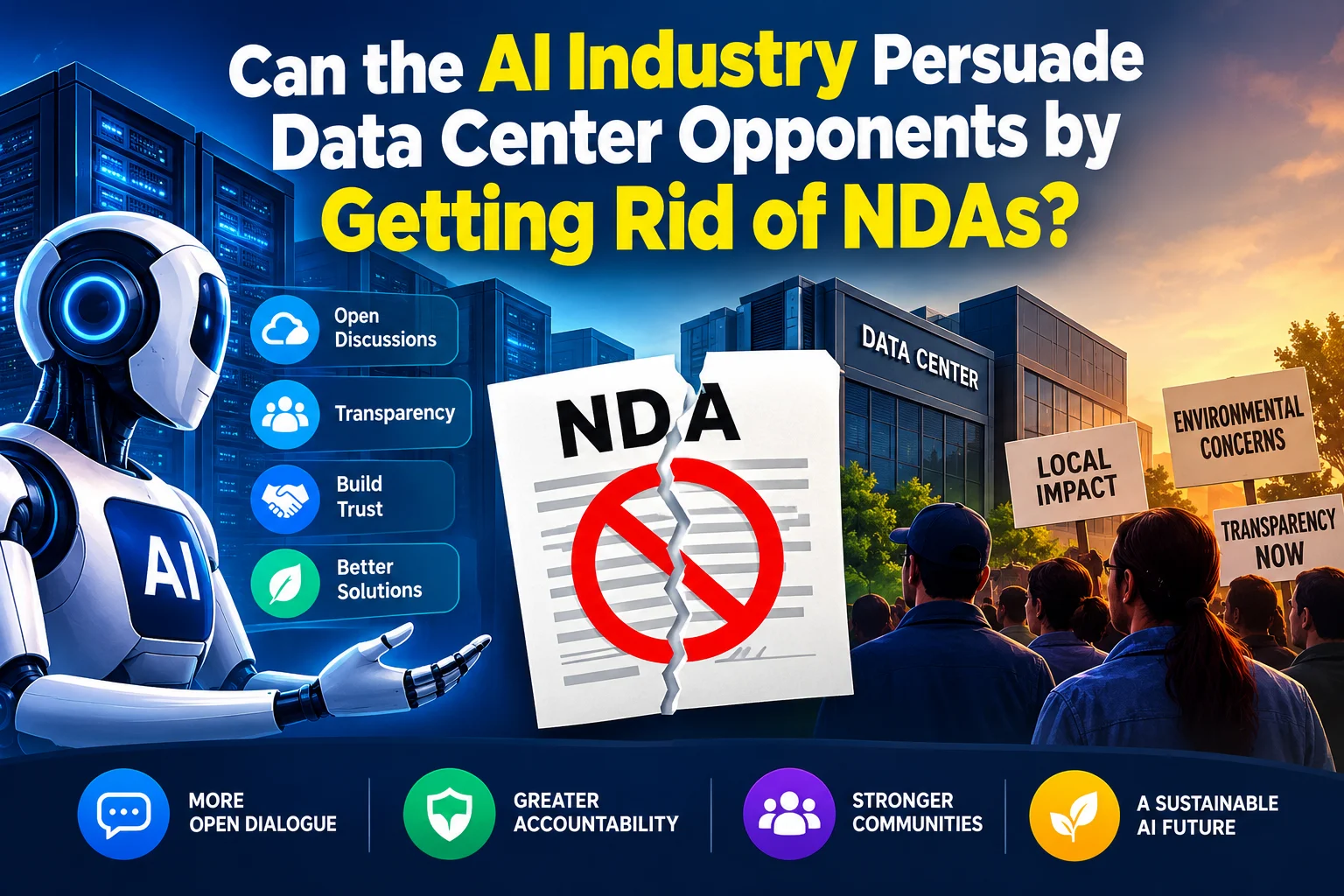

Data centers in the United States already consume more than four percent of the country total electricity. Experts predict that number will double before the end of the decade as artificial intelligence tools expand. Thousands of new computing facilities are planned across small towns and rural counties. Local residents are fighting back with growing anger against new construction projects.
Much of this anger stems from a legal tool known as the non disclosure agreement. Tech corporations routinely make local city councils sign secrecy pledges before discussing new facilities. These private pacts keep power demands, water usage, and tax incentives hidden from the public. Residents only discover the full project details after the building permits are already approved.
Dropping these secrecy pacts is now a central debate among technology leaders. Artificial intelligence developers need public support to build their giant computing centers. Opening up the planning process could rebuild trust with suspicious neighbors. We must examine whether full openness is enough to calm community resistance.
Why Tech Companies Rely on Secret Deals
Tech giants argue that non disclosure agreements protect valuable business plans. Developers do not want rival corporations to know where they plan to expand next. Keeping real estate purchases quiet also prevents land sellers from driving up property prices.
Secrecy gives corporations strong leverage during local tax negotiations. A technology firm can pit multiple small towns against each other to secure the biggest tax breaks. Local government officials often agree to silence because they fear losing giant investments to neighboring counties.
These private negotiations leave ordinary taxpayers completely in the dark. Citizens find out about massive sewer line expansions and electrical substations long after contracts are signed. By that point, local voters have zero chance to question how public resources get used.
Why Neighbors Are Fighting Back Against New Facilities
Public opposition to large computing centers is surging across the nation. Small communities worry about sudden increases in their monthly utility bills. When a facility demands as much power as a small city, local electric grids face severe strain.
Water usage is another massive concern for nearby neighborhoods. Large cooling towers can evaporate millions of gallons of drinking water every day to keep computer chips cool. In dry regions, farmers and homeowners worry that data facilities will drain local wells during summer droughts.
Constant mechanical noise also frustrates people living near existing sites. Giant backup generators and cooling fans produce a nonstop low frequency hum that travels for miles. Residents find it difficult to sleep or enjoy their backyards once a facility begins twenty four hour operations.
Secret Deals Compared to Open Community Planning
| Factor | Secret NDA Agreements | Open Community Planning |
|---|---|---|
| Public Trust | Low because residents feel betrayed | High because facts are shared early |
| Resource Planning | Strains local power and water without notice | Allows utilities to prepare upgrades in advance |
| Community Benefits | Focuses on corporate tax breaks | Focuses on shared local investments |
| Project Approval | Faces lawsuits and angry council meetings | Moves forward with clear neighborhood support |
| Environmental Data | Hidden behind legal barriers | Open for public review and independent testing |
How Secrecy Destroys Local Trust
Secrecy naturally makes people assume the worst about any new development. When a technology company refuses to share water figures, residents assume the facility will dry up local wells. The lack of clear information fuels rumors and panic at town hall meetings.
Elected officials who sign secrecy contracts quickly lose the trust of their voters. Citizens feel betrayed when their own mayors and county commissioners hide massive industrial plans. This anger often leads to political protests, recall campaigns, and legal challenges.
Mistrust spreads rapidly from one county to the next. Neighboring towns learn about secret deals from regional news reports and organize resistance before developers even arrive. A company that relies on secrecy creates an uphill battle for every future project it attempts to build.
What Happens When Companies Drop Secrecy Contracts
Ending non disclosure agreements allows honest conversations about shared public resources. Engineers can explain exactly how much electricity a building will draw from the regional grid. Utility providers can present clear plans showing how they will protect residential power supplies.
Openness lets companies showcase genuine environmental improvements. Modern computing centers often use closed loop cooling systems that recycle water instead of wasting it. Sharing these details publicly proves that a facility will not drain local water tables.
Residents can also see the actual tax revenue a project will generate for local schools. When townspeople see realistic financial numbers, they can weigh the trade offs fairly. Honest communication replaces wild rumors with verified facts.
Why Transparency Alone Will Not Solve Every Problem
Sharing clear data is a necessary first step, but facts alone will not stop all resistance. Some rural communities simply do not want massive concrete buildings replacing green farm fields. For these residents, no amount of financial data will justify the loss of open countryside.
Traffic and construction noise create unavoidable headaches during long building phases. Heavy trucks damage residential roads and disrupt quiet neighborhoods for months. Even an honest company cannot hide the physical reality of a giant construction site.
Noise from continuous cooling fans remains a legitimate quality of life issue. If a facility produces an annoying sound, residents will complain regardless of how transparent the developers were. Tech companies must pair transparency with real engineering solutions to reduce noise.
Real Solutions to Pair with Openness
Technology companies must invest in their own clean energy generation. Instead of taking green power from the public grid, firms should build dedicated solar and wind farms. Adding large battery storage systems ensures that computing facilities do not cause blackouts during heat waves.
Developers can install advanced sound walls and acoustic mufflers around cooling towers. Designing facilities with heavy insulation keeps mechanical sounds contained within property lines. Simple architectural choices can prevent years of neighborhood noise complaints.
Companies should also contribute directly to local community projects. Paying for new school science labs, public parks, and volunteer fire department gear builds goodwill. When a business acts like a supportive neighbor, local residents are far more likely to welcome it.
The Growing Legal Push to Ban Public Secrecy
State lawmakers are taking notice of public anger over secret corporate deals. Several state legislatures have introduced bills that ban local governments from signing non disclosure agreements for economic development projects. These laws ensure that any company seeking public resources must present its plans openly.
Citizen groups are using open records laws to expose hidden negotiations. Judges increasingly rule that taxpayers have a legal right to inspect communications between public officials and tech corporations. The legal climate is turning sharply against backroom negotiations.
Companies that voluntarily abandon secrecy agreements will stay ahead of these legal changes. Proactive honesty positions a business as a responsible leader rather than a target for government investigation. Adopting open standards now prevents costly legal fights later.
Better Project Design Through Public Input
Early public discussions often reveal simple design changes that avoid major conflicts. For instance, neighbors might suggest moving an entrance road to protect a quiet residential street. Local farmers might point out soil conditions that make certain drainage designs much more effective.
Listening to community feedback leads to better engineering decisions. When engineers explain their technical needs to local utility operators, both sides find smarter ways to share power lines. Collaboration produces projects that run smoothly from day one.
Open planning shortens the time required to secure building permits. Projects wrapped in secrecy face constant zoning appeals and court injunctions that delay construction for years. Clear community support lets builders break ground quickly and finish on schedule.
How Local Governments Can Protect Taxpayers
City and county leaders must establish clear rules before meeting with technology firms. Public officials should refuse to sign any contract that prevents them from discussing resource usage with their constituents. True public service requires open communication at every step.
Local governments should require independent environmental reviews for large computing projects. Letting an outside engineering firm check power and water estimates gives citizens confidence in the data. Independent verification removes doubts about corporate bias.
Elected leaders must ensure that corporate tax agreements benefit the whole community. Tax breaks should include firm commitments for local job training and infrastructure funding. A well crafted agreement protects the public interest while encouraging smart economic growth.
Building Long Term Community Partnerships
Data facilities operate for decades once they are built. Establishing a friendly relationship with the surrounding town is essential for long term stability. Technology companies cannot afford to treat local communities as passive hosts for server racks.
Ongoing transparency should continue long after construction finishes. Facilities can publish monthly environmental reports on public websites to show actual water and electricity consumption. Regular neighborhood meetings provide an open forum for residents to voice any new concerns.
Offering tours for local school classes and civic groups demystifies what happens inside these giant buildings. When people see the high level safety standards and clean facilities firsthand, fear turns into curiosity. Long term success depends on keeping the lines of communication open forever.
Conclusion
The artificial intelligence industry cannot solve its public relations crisis with secret deals and legal gag orders. Non disclosure agreements breed suspicion, anger local taxpayers, and spark bitter community resistance. Ending secrecy is the single most important step tech leaders can take to rebuild public trust.
Openness alone will not answer every environmental question, but it provides the only foundation for honest discussion. When developers share clear data, invest in clean power, and listen to local concerns, communities can make informed choices. The path to responsible technology infrastructure requires sunlight, accountability, and genuine partnership.
If your town is considering a new data facility, speak up at local council meetings today. Ask your elected officials to reject secret non disclosure agreements and demand full transparency on power and water usage. Informed citizens are the best guarantee of a fair and sustainable future.



Discussion
No comments yet. Be the first to share your thoughts!
Leave a Comment