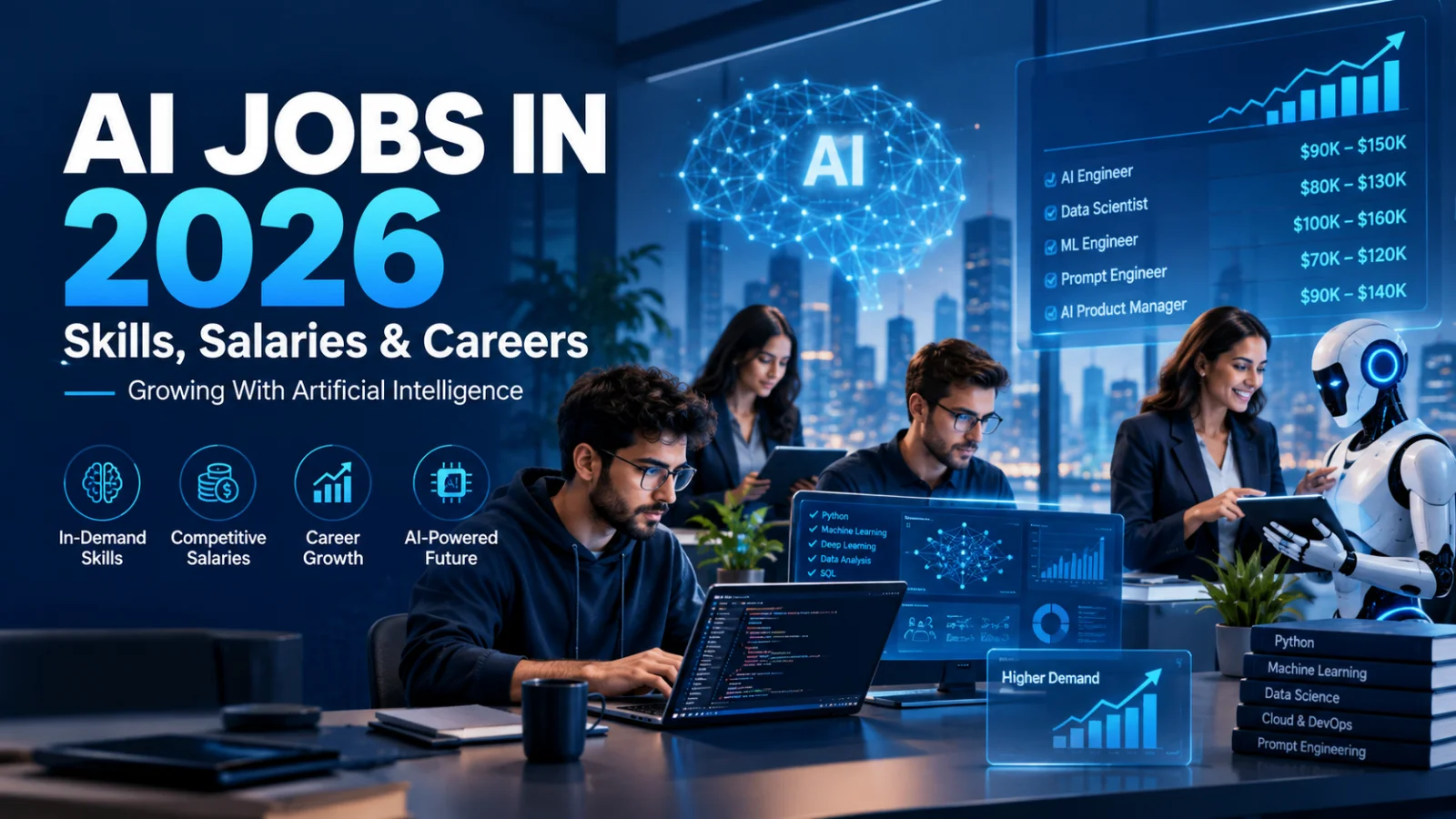

Over ninety million new technology positions will center on smart automation by the end of 2026. Companies across every major industry are investing billions of dollars to build automated systems. This surge means that AI jobs in 2026 offer exceptional job security and some of the highest salaries in the modern economy. Anyone willing to learn practical technical tools can step into this growing field.
The demand for talented workers is moving much faster than the supply of qualified applicants. Businesses need people who can build, manage, and fix automated software tools every single day. You do not need an advanced mathematics background to find a solid position in this space. Learning how these tools operate will give you a major advantage over other job seekers.
The Big Shift in the Employment Market
Many people worry that automation will erase their daily employment options. In reality, smart software creates more positions than it eliminates across the global market. New systems require human oversight, clean data, and regular maintenance to operate properly. Workers who learn to work alongside software are discovering that their career options expand quickly.
Businesses want to eliminate repetitive tasks and increase their daily efficiency. They are looking for staff members who know how to set up automated workflows and interpret system outputs. This creates steady demand for people who connect business operations with software engineering. Landing AI jobs in 2026 requires learning practical tools that solve real company problems.
Top Careers Growing With Artificial Intelligence
Machine learning engineers remain at the very top of hiring priority lists. These professionals create the core algorithms that allow software to recognize patterns from raw information. They write code that helps applications improve their performance over time without direct human intervention. Most companies pay top tier compensation packages to engineers who can build reliable software systems.
AI ethics specialists represent another rapidly expanding career path for analytical thinkers. Governments and corporations need clear rules to prevent software bias and protect user privacy. These specialists evaluate software code to make sure systems treat all users fairly and obey local regulations. A background in law, philosophy, or social science makes this role very accessible to non programmers.
Prompt engineers and language model trainers focus on direct communication with text generation systems. They design precise inputs to discover which instructions produce the most accurate answers. Their daily work helps companies build custom customer support tools and internal documentation bots. This career values clear writing skills and strong logical thinking over heavy software development.
Data scientists gather and organize the massive pools of information required by automated algorithms. Raw records are usually messy, disorganized, and filled with errors that confuse software. These workers clean up datasets so algorithms can spot genuine trends and patterns. Without clean data inputs, even the most expensive smart system produces completely useless results.
AI product managers lead development teams from the initial planning stage to public launch. They determine which features an automated product needs and when those features should be built. These leaders speak directly with customers to discover what daily challenges need solutions. Strong leadership skills and clear communication are vital for anyone who wants to succeed in this role.
Computer vision engineers teach cameras and visual sensors to interpret the physical environment. Self driving vehicles, medical scanners, and automated warehouse robots all rely on vision systems to operate safely. Healthcare networks and manufacturing plants compete heavily to hire experienced vision programmers. This career path is ideal for professionals who enjoy combining software code with physical hardware.
Essential Technical Skills for AI Jobs in 2026
Computer programming remains a core foundation for technical positions in this growing sector. Python is the most popular programming language because it is easy to read and has massive software libraries. Learning basic Python syntax allows you to build working prototypes in a short amount of time. Other programming languages like JavaScript and C++ also remain valuable for specialized hardware projects.
Applied mathematics and statistics help you discover why an algorithm behaves in a certain way. You do not need a doctorate in calculus to build effective software tools. Having a clear grasp of basic probability, linear algebra, and statistical distributions will help you fix software errors. These math fundamentals allow you to fine tune your models for much higher accuracy.
Cloud computing platforms host most modern intelligence applications and large datasets. Cloud providers like Amazon Web Services, Google Cloud, and Microsoft Azure store these massive systems. Learning how to deploy code onto remote cloud servers makes your resume stand out to employers. Technical skills for AI jobs in 2026 include managing cloud storage, setting up virtual servers, and monitoring system uptime.
Data engineering tools allow you to collect, clean, and pipe data into algorithms efficiently. Knowledge of SQL databases is necessary for extracting business records from company servers. You should also learn how to use data processing frameworks that handle millions of records at once. Clean data pipelines ensure that automated models always have fresh information to study.
Human Skills That Machines Cannot Replace
Critical thinking is the most valuable non technical asset you can bring to an organization. Automated tools can generate hundreds of ideas in seconds, but they cannot evaluate which idea makes business sense. Human workers must check outputs to catch factual mistakes, hallucinations, and illogical statements. Your personal judgment protects your company from making expensive operational errors.
Clear communication separates average technical workers from the highest earners in the company. You must be able to explain technical processes to managers who have zero programming experience. Writing concise emails, project briefs, and technical documentation saves your team valuable time. Projects move much faster when technical staff can speak plain, direct language.
Adaptability helps you remain valuable as software frameworks change every few months. A programming library that is popular today might be replaced by a faster option next year. Successful professionals treat continuous learning as a regular habit rather than a temporary chore. Staying open to modern methods keeps your career safe from industry changes.
Time management allows you to balance multiple project tasks without missing key deadlines. Working with complex software requires patience and deep focus for long periods. You must know how to prioritize urgent bug fixes over long term feature planning. Good personal organization makes you a reliable asset on any engineering team.
Realistic Salaries for AI Careers
Pay rates in this technical sector are among the most generous in the modern job market. Companies offer competitive pay because skilled developers produce massive financial returns for their businesses. Even junior positions pay well above the typical average for standard corporate roles. Total compensation packages usually combine base pay, company stock options, and annual performance bonuses.
Salaries for AI jobs in 2026 reflect high market demand and a shortage of experienced staff. The table below outlines average yearly compensation ranges for major positions in this field.
| Job Title | Average Annual Salary Range |
|---|---|
| Prompt Engineer | $95,000 to $155,000 |
| AI Ethics Specialist | $110,000 to $175,000 |
| Data Scientist | $120,000 to $185,000 |
| Computer Vision Engineer | $135,000 to $210,000 |
| Machine Learning Engineer | $145,000 to $225,000 |
| AI Product Manager | $140,000 to $215,000 |
Experience levels create clear differences across these broad salary ranges. Entry level employees start near the lower end of the bracket while senior specialists earn the top numbers. Location also affects pay rates, although remote work options remain very common for software teams. Living in an affordable city while earning a major tech salary is now an achievable reality for many workers.
Annual bonuses can increase your total yearly earnings by ten to thirty percent. Many tech companies also provide equity grants that grow in value as the business expands. Strong performance reviews often lead to rapid pay raises during your first few years. Developing specialized skills in high demand niches gives you substantial leverage during salary negotiations.
Top Industries Hiring Artificial Intelligence Talent
Healthcare networks are hiring thousands of technical workers to improve patient diagnosis and hospital efficiency. Medical centers use intelligent image recognition to spot health issues on X rays and scans early. Biotechnology firms use predictive algorithms to design life saving medications in a fraction of the normal time. Working in healthcare gives you the chance to do meaningful work while earning a great living.
Financial institutions rely heavily on automated systems to detect criminal activity and manage investment risk. Commercial banks scan millions of credit card transactions every second to stop unauthorized charges. Algorithmic trading firms use machine learning to make rapid investment decisions on stock exchanges. Investment firms pay massive bonuses to engineers who can improve the speed and accuracy of their financial software.
Retail and commerce companies use predictive software to forecast inventory needs and personalize shopping recommendations. Every time a shopping website suggests a product, an algorithm is processing user history in the background. Logistics companies use route optimization software to speed up deliveries and lower fuel expenses. These widespread commercial uses create stable jobs that hold up well during economic slowdowns.
Manufacturing and automotive plants need robotics specialists to operate modern assembly lines. Automated factories require human technicians to program robotic arms and track production quality. Car manufacturers are investing billions of dollars into self driving systems and driver assistance features. These industrial roles offer an exciting mix of software development and physical machinery work.
Entertainment and media companies use automation to speed up video game creation and visual effects. Game studios use smart algorithms to generate realistic virtual worlds and intelligent non player characters. Streaming platforms use recommendation algorithms to keep viewers engaged with personalized video feeds. Creative companies value technical workers who know how to build tools for artists and game designers.
How to Switch Careers Into Artificial Intelligence
Switching to AI jobs in 2026 is entirely possible for workers from non technical backgrounds. You do not need to discard your previous work history when moving into this new field. Teachers often make excellent prompt engineers because they know how to break down complex ideas into simple instructions. Financial analysts can move into data science because they already have experience working with complex spreadsheets.
Start your transition by learning one foundational tool at a time. Trying to study multiple programming languages at once will quickly lead to mental fatigue. Spend thirty minutes each evening practicing basic Python coding or studying data management tools. Small daily practice sessions turn into massive skill growth over several months.
Join online communities where developers share code and give each other constructive feedback. Platforms like GitHub and open discussion forums are filled with experienced programmers who are happy to help beginners. Asking practical questions and reading public code repositories will speed up your learning curve. Making friends in developer groups can also lead to direct internal job referrals.
Set clear weekly learning targets to maintain your personal momentum. Building a simple calculator program during your first month is better than reading theory books without writing code. Apply every concept you study by building small, functional software tools on your home computer. Real progress happens when you write code that runs without errors.
Building a Portfolio That Attracts Recruiters
Securing top AI jobs in 2026 depends on real proof of skill rather than formal credentials alone. A well organized portfolio of original projects is the strongest evidence of your ability. Do not simply copy standard classroom assignments that hundreds of other applicants submit on their resumes. Build unique software tools that address real problems faced by local businesses or everyday consumers.
Document your development work publicly on code sharing platforms. Write clear summaries explaining what problem your application solves, how you wrote the code, and how you fixed major bugs. Creating short video demonstrations proves to hiring managers that your software works as advertised. Clear documentation shows recruiters that you take pride in your technical craft.
- Build a document processing tool that summarizes long legal contracts and highlights important risk clauses.
- Create a visual detection program that spots manufacturing defects in physical items using a standard webcam.
- Develop a custom chatbot for a local business that answers customer inquiries using a private knowledge base.
Publishing working software online helps your application stand out from the competition immediately. Hiring managers prefer clicking a live demo link over reading long lists of buzzwords on a paper resume. Having three complete, well tested projects is much better than having a dozen unfinished experiments. Make sure your project repositories are organized, documented, and free of broken links.
Education and Certification Paths That Matter
Qualifying for AI jobs in 2026 does not always require a four year computer science degree. Many leading software firms have removed rigid university degree requirements from their standard job postings. They care far more about your actual coding performance and your portfolio quality during the technical interview. Intensive coding programs and structured online courses offer practical training in a short timeframe.
Industry certifications help validate your technical abilities to corporate human resource screeners. Major cloud providers offer specialized certifications for machine learning engineering and data management. Earning these recognized credentials helps your resume pass through automated screening software. Pair these professional certifications with your personal projects to build an impressive application.
Self study remains one of the most effective paths for disciplined career changers. Free online tutorials, open source code bases, and digital textbooks contain all the technical knowledge you need. You must establish a consistent study schedule to work through difficult programming topics on your own. Treating your study time like an actual job will help you reach your career goals much faster.
Common Mistakes to Avoid When Applying
Candidates applying for AI jobs in 2026 often ignore basic business needs while focusing only on complex theory. Companies do not hire software developers simply to write complicated mathematical formulas. Businesses hire engineers to lower operational expenses, raise sales revenue, and save employee time. Always describe your personal projects in terms of the practical business value they produce.
Chasing every new software framework without understanding the basics is another frequent trap for beginners. New software tools are released every month, but fundamental programming concepts remain the same year after year. Focus on mastering clean code structure, logic, and basic data processing before jumping to trendy tools. A strong foundation allows you to learn any new framework within a couple of days.
Waiting too long before submitting job applications can delay your career growth unnecessarily. Many candidates believe they must master every single computer topic before sending out their first resume. Most job postings are ideal wish lists rather than rigid requirements that must all be met. Apply for open roles as soon as you match about half of the listed qualifications and have projects to prove your skill.
Failing to prepare for technical interviews can cost you great job offers. Many companies ask applicants to solve live coding problems or explain algorithmic choices on a whiteboard. Practice explaining your technical decisions out loud so you sound confident during live interviews. Clear communication during an interview is just as important as writing correct code.
The Future of Work With Smart Systems
The technology sector will continue to evolve as automated tools become faster and more integrated into business operations. Staying curious about new developments is the best way to maintain long term career stability. Check job boards regularly to see which tools and programming languages companies are adding to their notices. Updating your practical skill set ensures that your services remain in demand across the industry.
Leadership opportunities will expand as corporate technical teams continue to grow larger. Experienced individual developers often advance into project management, team leadership, or executive advisory roles. Stepping into management positions allows you to guide company strategy while earning executive level pay. Building strong interpersonal skills early in your career will prepare you for these leadership opportunities.
Freelance consulting offers another flexible career path for experienced technical professionals. Many small and medium businesses want to adopt automated tools but cannot afford full time engineering departments. Independent consultants help these companies set up custom workflows and optimize their daily operations for a fee. Consulting allows you to set your own work schedule while serving multiple clients.
Next Steps for Your AI Career
Building a path toward AI jobs in 2026 takes steady effort, practical practice, and clear focus. The demand for qualified talent is massive, the pay scales are attractive, and the career paths are wide open. You do not need to wait for special permission or expensive credentials to begin your learning process.
Choose one foundational programming language today and start building your very first software project. Dedicate thirty minutes each day to writing code, share your work online, and connect with other developers in the field. Your technical career starts with the effort you put in right now. Take your first step today and begin building the skills that modern companies need.



Discussion
No comments yet. Be the first to share your thoughts!
Leave a Comment