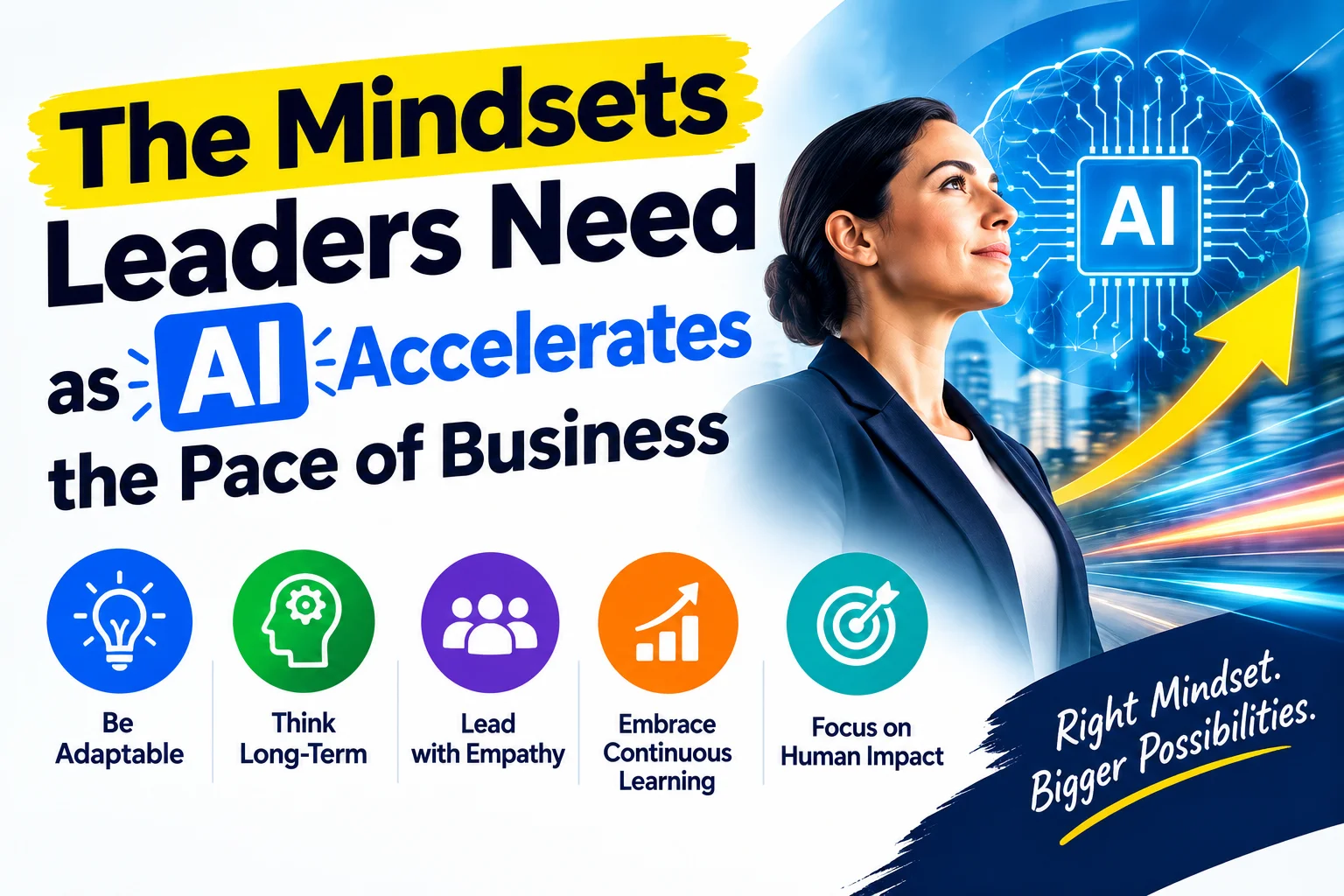

Over seventy percent of corporate leaders report that automated technology has completely altered their company roadmaps in the past twelve months. Business cycles that once took quarters now happen in a few days. Companies that move slowly risk falling behind rivals who test ideas at lightning speed. Developing a modern AI Leadership Mindset allows managers to guide their teams through these sudden shifts with clarity.
Software tools can write code, analyze sales patterns, and draft marketing messages in seconds. This speed forces executives to rethink how they manage people, budgets, and operational goals. Leaders can no longer rely purely on past experience to solve fresh problems. Success now belongs to individuals who adapt quickly and stay curious.
Why Speed Is Rewriting Modern Business Rules
Traditional business planning relied on slow yearly forecasts and rigid quarterly reviews. Today market conditions shift rapidly as automated software spots new customer buying trends. Companies that wait months to approve a project often find that their window of opportunity has closed. Fast action has become just as important as careful planning.
Leadership in the Age of AI requires shortening the distance between having an idea and testing it. Managers need to run small tests, review the output, and make adjustments immediately. This active testing style reduces risk because failures happen fast and cost very little. Teams learn what works in real time instead of guessing behind closed doors.
Cultivating Curiosity Across Executive Teams
Fixed expertise is losing value as automated software masters technical skills. Executives who believe they already know all the answers will struggle to keep up. Curious leaders ask better questions and stay eager to learn about new tools. This open attitude sets a positive tone for the entire workforce.
When managers test new software openly, their employees feel safe doing the same. Fear of the unknown fades away when leaders show that learning is a normal part of work. Teams begin to share helpful shortcuts and discover creative ways to solve daily bottlenecks. Curiosity transforms workplace anxiety into productive exploration.
Moving from Fear to Collaboration with Automation
Many workers feel nervous when companies introduce automated systems into their daily workflow. They worry about losing their jobs or becoming obsolete in their current roles. Empathetic managers address these fears directly by explaining why new tools are being adopted. Clear communication reassures workers that software is meant to support their talents.
Leading with AI means showing employees how automation removes tedious, repetitive chores from their plates. Workers spend less time copying spreadsheet numbers and more time talking with valuable clients. This shift makes daily work far more rewarding and creative for everyone involved. Organizations grow faster when human talent combines with mechanical speed.
Speed and Accuracy in Strategic Decision Making
Modern dashboards collect millions of data points every single hour. This constant stream of numbers can easily paralyze an executive who tries to study every single detail. Successful managers focus on the core signals that actually move business revenue. They filter out daily noise and pay attention to major trends.
Waiting for total certainty before making a move is a dangerous habit. Modern markets move too quickly for slow committee reviews and endless debate. Capable leaders gather the best automated facts available and make confident choices. If a decision turns out wrong, they pivot quickly without wasting time on regret.
Core Mindset Shifts for Today's Business Leaders
- Replace rigid annual forecasts with continuous quarterly testing and rapid adjustments.
- View technological software as a helpful partner rather than a cheap replacement for people.
- Encourage fast learning cycles instead of protecting old and outdated working habits.
- Give frontline employees the authority to make smart choices using real time data.
- Balance automated speed with strong personal ethics and clear human accountability.
Building a Strong Culture of Continuous Learning
Software platforms receive updates, new features, and bug fixes on a weekly basis. Static training manuals become outdated almost as soon as they are printed. Companies must treat learning as an ongoing daily habit rather than a once a year seminar. Managers should dedicate regular work hours for staff to study and test new tools.
Providing clear educational budgets shows workers that you care about their personal career growth. Employees stay loyal to employers who help them build valuable, modern skills. This investment builds a resilient team capable of handling any new technical challenge. Continuous education is the smartest insurance policy against sudden market disruptions.
Balancing Rapid Pace with Human Empathy
Accelerating business operations can easily lead to employee stress and workplace exhaustion. When tools move fast, people sometimes feel pressured to work without taking breaks. Compassionate leaders recognize the limits of human energy and protect their workers from burnout. Sustainable success requires a healthy balance between technological speed and human rest.
Listening to team feedback helps managers spot flawed software rollouts before damage occurs. Frontline workers notice immediately when an automated program creates extra friction or confusing errors. Giving staff a safe voice allows you to fix problems before they hurt customer relationships. Genuine empathy creates trust that no machine can duplicate.
Guarding Ethics and Accountability in Automated Workflows
Automated models can produce biased recommendations or state incorrect facts with total confidence. Executives remain legally and morally responsible for the final output of every system they deploy. Relying blindly on automated suggestions without human review invites major legal and reputation risks. Responsible leaders build safety checks to verify that outputs remain fair and accurate.
Protecting customer privacy must remain a top priority as systems process larger amounts of personal data. Clear policies on data protection show customers that your company values their trust. Transparent business practices protect your brand reputation and prevent costly government fines. Ethical leadership is an essential shield in a fast moving corporate world.
Redefining Productivity and Performance Metrics
Tracking the exact hours an employee sits at a desk makes very little sense today. Automation allows a focused worker to complete an eight hour task in forty minutes. Progressive companies evaluate employees based on their actual results and project impact. Rewarding quality output encourages team members to find faster and smarter ways to work.
Old management metrics often punished workers who used shortcuts to finish tasks early. Modern leadership rewards efficiency and shares the benefits of automation with the team. When workers know that working smarter brings recognition and free time, they adopt new tools eagerly. Aligning employee incentives with modern software creates a motivated and productive workforce.
Actionable Steps to Improve Your Management Approach
Updating your leadership style starts with examining your own daily working routine. Identify which meetings and administrative duties consume your time without adding clear value. Delegate repetitive tasks to automated tools so you can focus on high level strategy and coaching. Leading by example proves to your team that modern workflows truly work.
Form small pilot groups within your company to test new software tools before rolling them out widely. Let these small groups explore, discover best practices, and document what works well. Their success will inspire other departments to adopt similar methods naturally. This bottom up adoption creates far less friction than top down company mandates.
Schedule open review meetings where team members can discuss what worked and what failed. Celebrate creative experiments even if they did not produce the expected financial return. When employees see that reasonable risks are welcomed, innovation thrives across the whole business. Open communication turns every mistake into a valuable lesson for the entire company.
Dangerous Pitfalls Every Modern Executive Must Avoid
Ignoring human relationships while chasing pure digital efficiency is a severe mistake. Clients still buy from people they trust, especially when complex problems or high value contracts arise. Automated tools should handle routine tasks so humans have more time to build meaningful client connections. Preserving personal relationships protects your competitive position.
Another common trap is adopting software tools simply because they are popular in tech news. Every new platform must solve a specific operational bottleneck or serve a clear business goal. Buying software without a plan wastes money and confuses employees with unnecessary complexity. Disciplined executives select tools based on real utility rather than current social media buzz.
The Future of Executive Leadership in a Fast Market
The rate of technological development will continue to speed up in the coming years. New tools will emerge that make today software look basic and slow by comparison. Leaders who master adaptability and clear communication will thrive regardless of which tools dominate the future. A fundamental purpose of leadership remains guiding people to shared goals with integrity.
AI Business Leadership is not about becoming a computer programmer or data scientist. It is about knowing human psychology, setting clear direction, and staying open to change. Combining timeless leadership principles with modern speed gives your business an enduring advantage. Managers who embrace this balance will build resilient organizations ready for any challenge.
Build Your Modern Leadership Mindset Today
Adopting a modern leadership approach helps your business grow, protects your team from burnout, and sharpens your competitive edge. When you lead with curiosity, empathy, and speed, your organization adapts naturally to any market disruption. You create an open environment where employees feel inspired to learn, experiment, and succeed together.
Take the first step today by reviewing how your team handles routine decisions and daily tasks. Encourage your staff to test new tools, ask bold questions, and share their findings openly. Lead your business into the future with confidence, clarity, and purpose.

Discussion
No comments yet. Be the first to share your thoughts!
Leave a Comment