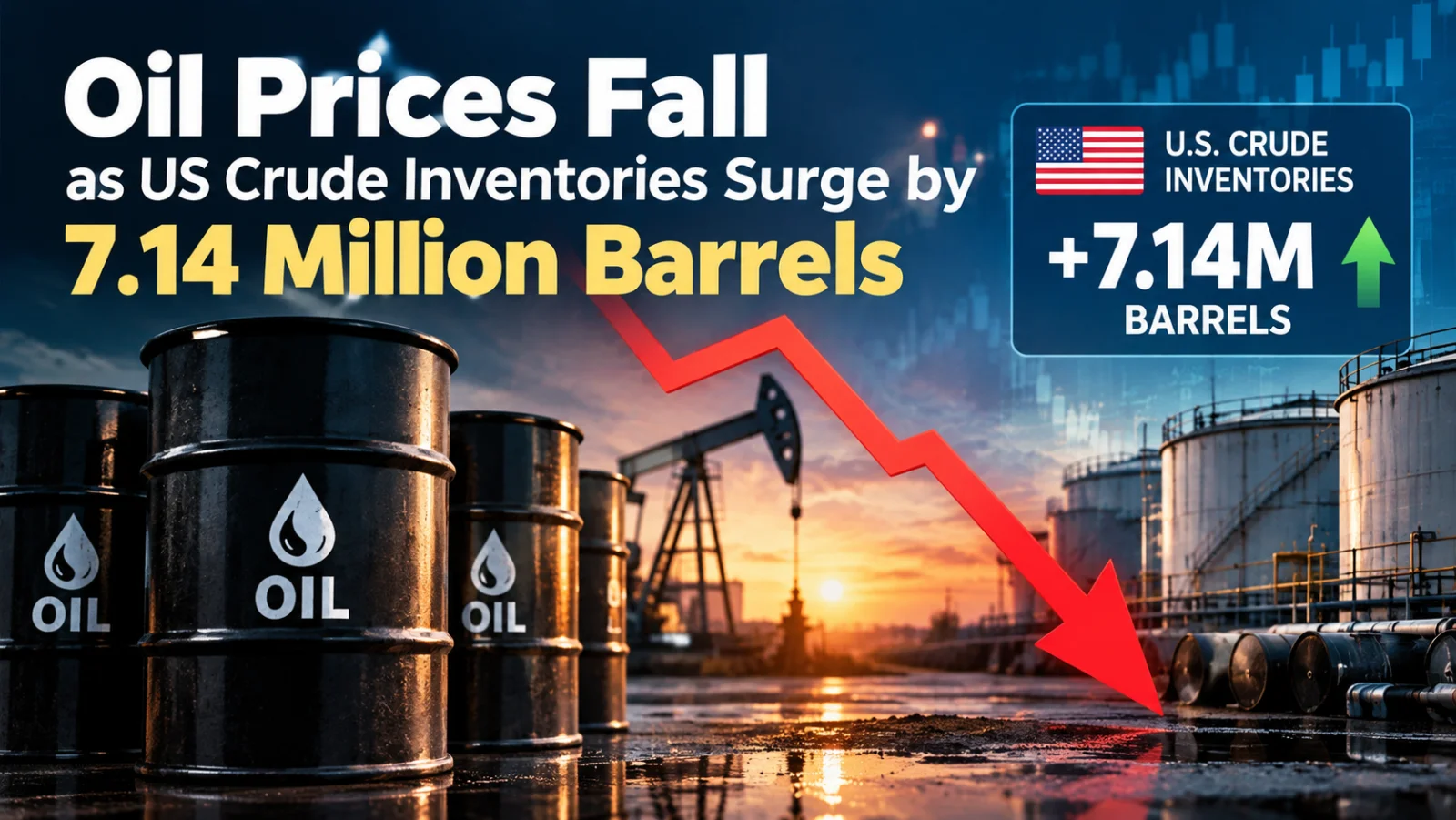

Weekly government data shocked energy traders when commercial crude stockpiles grew by more than seven million barrels in a single week. Market analysts expected a small decline of one million barrels. Instead, oil prices fall as US crude inventories surge by 7.14 million barrels, sending futures contracts downward across global exchanges. Drivers and business owners are now watching closely to see how this massive inventory build affects prices at the gas pump.
Energy markets react swiftly whenever supply numbers move far away from normal expectations. When storage tanks fill up faster than refineries can process crude, sellers must lower their asking prices to move product. This sudden supply jump has shifted the price outlook for energy commodities over the coming months.
Why Oil Stockpiles Jumped Faster Than Expected
Several key factors caused this dramatic rise in stored crude oil. Refinery maintenance schedules played a massive part in slowing down crude consumption. Many processing plants across the Gulf Coast reduced operations to perform seasonal repairs on their equipment. When refineries slow down, they buy less crude oil, leaving millions of extra barrels sitting in storage facilities.
Crude oil imports also increased during the exact same period. Tankers arriving at major shipping ports delivered heavy volumes of foreign crude to American terminals. Domestic oil producers continued pumping oil at steady record levels throughout the week. The combination of high production, increased imports, and slower refinery processing created a massive surplus.
How Extra Supply Pushes Fuel Costs Lower
The basic rules of supply and demand explain why crude prices drop when storage tanks fill up. Buyers have plenty of options when supply is high, so they refuse to pay premium rates. Oil producers must compete with each other to sell their barrels, which forces market prices down.
Crude oil futures contracts dropped by more than two dollars per barrel immediately following the government data release. Both West Texas Intermediate and Brent crude saw rapid selling pressure during afternoon trading sessions. Traders who held positions betting on higher prices sold their holdings to avoid bigger losses. This wave of selling pushed prices down across the entire energy sector.
Key Data Points from the Energy Report
Reviewing the specific figures from the weekly energy report reveals important details about the state of the petroleum industry. Here is what happened across major energy categories during the week:
- Crude oil inventories increased by 7.14 million barrels above the previous week.
- Refinery utilization rates dropped by two percent as plants started seasonal repairs.
- Gasoline inventories remained steady while overall fuel demand showed slight seasonal declines.
- Domestic crude production held near record highs of more than thirteen million barrels per day.
What This Means for Everyday Drivers at the Pump
Cheaper crude oil directly impacts what everyday drivers pay when filling up their fuel tanks. Crude oil makes up more than half of the total retail cost of a gallon of gasoline. When crude costs fall, gas stations usually drop their retail prices within two to three weeks.
Refineries need time to clear out higher cost fuel before passing savings along to local stations. Drivers in the Midwest and southern states will likely see lower prices first because they live closer to major refining hubs. Lower fuel costs provide welcome relief for household budgets that have been stretched by general inflation. Commuters can expect to keep more money in their wallets if crude prices remain low.
The Impact on Trucking and Commercial Shipping Costs
Commercial transportation companies benefit greatly whenever crude oil stockpiles increase. Diesel fuel powers the freight trucks, cargo trains, and delivery vans that move goods across the country. Falling oil prices help trucking companies lower their daily operating costs.
Lower diesel prices also help keep grocery and retail prices stable for consumers. Shipping companies often pass fuel savings back to business clients through lower fuel surcharges. Lower transportation overhead means retail stores do not have to raise prices on heavy consumer goods. This chain reaction helps cool down broader economic pressures.
How Seasonal Refinery Maintenance Cycles Work
Refineries follow a predictable routine twice every year to clean and upgrade their heavy machinery. Spring and autumn are the standard times for this maintenance work to take place. During these periods, plants shut down several processing units to replace filters, clean pipes, and install new safety valves.
Switching from winter blend gasoline to summer blend fuel also requires planned downtime. Summer gasoline requires complex chemical mixtures to prevent evaporation in hot weather. Refineries must drain their tanks and adjust their refining units before making the new fuel blends. This temporary slowdown in processing naturally causes crude oil to stack up in storage tanks.
Global Energy Factors to Keep in Mind
Domestic supply numbers tell only one part of the total energy story. Global oil production decisions from foreign alliances like OPEC continue to influence overall price trends. If foreign producers decide to cut their output, global supply could tighten quickly.
Economic conditions in major industrial nations also dictate how much energy the world consumes. Slower manufacturing activity in foreign markets can reduce international oil demand. When global demand weakens at the same time US stockpiles grow, price drops tend to last longer. Energy traders must weigh international events alongside domestic inventory figures every day.
What Energy Investors and Analysts Should Watch Next
Market watchers should track the upcoming weekly storage reports to see if the supply build continues. Another large increase in storage next week would confirm that supply is outpacing demand by a wide margin. A sharp rebound in refinery activity, however, could quickly draw down those surplus barrels.
Gasoline consumption numbers will also signal how strong consumer demand is as travel seasons approach. Higher highway travel usually absorbs extra gasoline supplies very fast. Following refinery utilization rates will show when processing plants return to full operating speed. These data points provide early clues about where energy prices will move next.
How Businesses Can Take Advantage of Lower Fuel Rates
Companies that rely heavily on vehicles should use this period of lower oil prices to their advantage. Fleet managers can lock in bulk fuel contracts at favorable rates before seasonal demand picks up again. Securing lower fuel prices in advance protects business profits from sudden market spikes later in the year.
Small business owners can also adjust their delivery budgets and delivery routes. Lower gas costs allow companies to expand their delivery service areas without losing profit margin. Taking smart steps during a market dip creates long term financial stability for commercial fleets.
Conclusion and Next Steps for Consumers
Oil prices fall as US crude inventories surge by 7.14 million barrels, providing a clear sign of short term energy surplus. Slower refinery activity, strong imports, and steady domestic output have combined to push market prices downward. Drivers, fleet operators, and consumers should see the benefits of cheaper fuel at the pump over the coming weeks.
Take time to review your household or business fuel expenses today. Plan your travel budgets and consider filling up heating oil tanks while prices remain favorable. Stay informed by checking weekly energy inventory updates so you are always ready for future market shifts.



Discussion
No comments yet. Be the first to share your thoughts!
Leave a Comment